
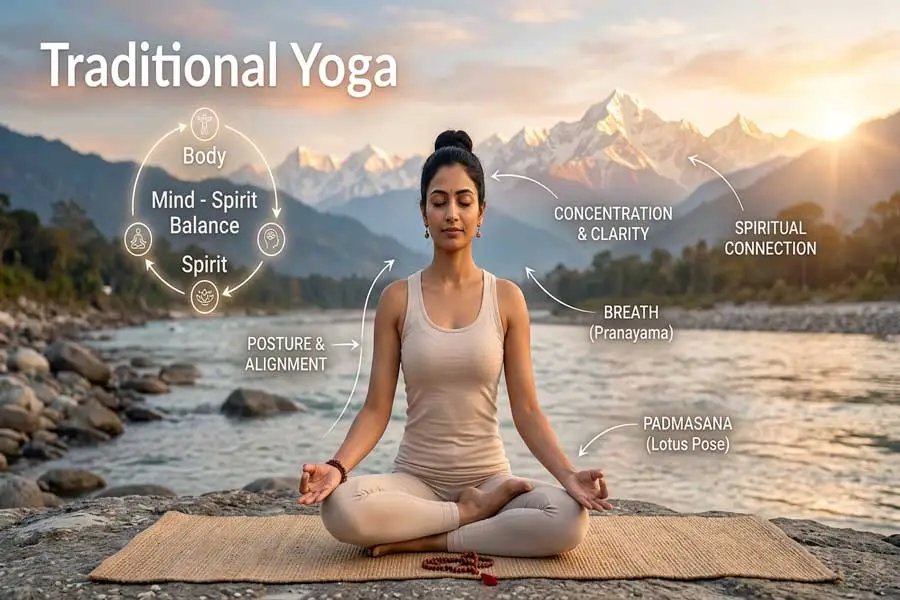
Yoga has become one of the most popular wellness practices in the world. From busy professionals to students and fitness enthusiasts, millions of people practice yoga every day. However, what many people experience today is often a modern version of yoga. Traditional Yoga, the original form practiced in ancient India, is much deeper than just physical exercise.
This ancient yoga system focuses on the connection between body, mind, and spirit. It combines physical postures, breathing techniques, meditation, and ethical principles to create a balanced and healthy life. In this guide, we will explore what this classical practice is, its history, key practices, and the benefits it offers for modern lifestyles.
What is Traditional Yoga?
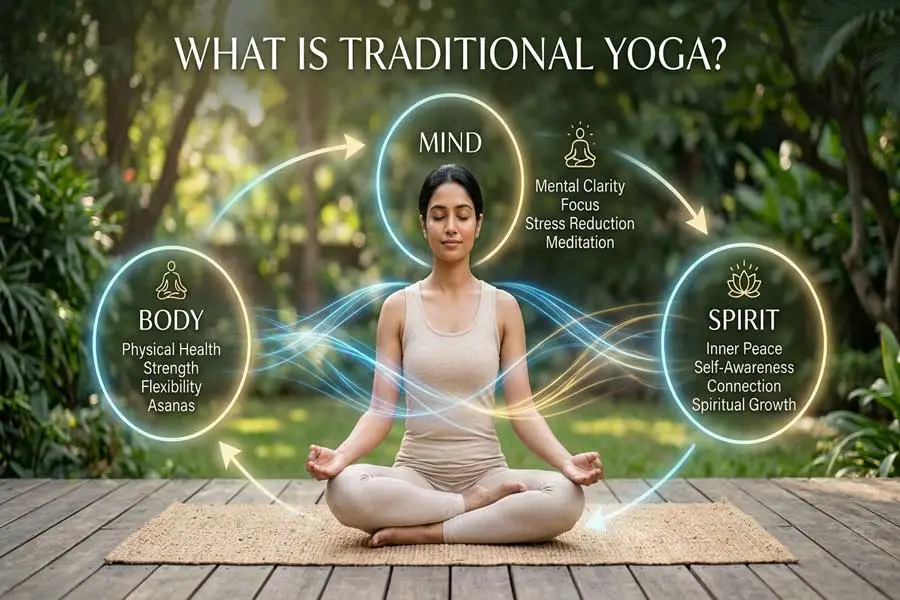
Traditional Yoga is the authentic and ancient system of yoga that originated in India more than 5,000 years ago. It was developed by ancient sages and yogis as a way to achieve physical health, mental clarity, and spiritual growth.
Unlike modern fitness yoga classes that focus mainly on stretching or flexibility, traditional yoga is a complete lifestyle practice. It includes:
- Physical postures (Asanas)
- Breathing techniques (Pranayama)
- Meditation (Dhyana)
- Moral and ethical principles (Yamas and Niyamas)
The main goal of traditional yoga is not only physical fitness but also inner peace, self-awareness, and balance in life.
The History and Origin of Traditional Yoga
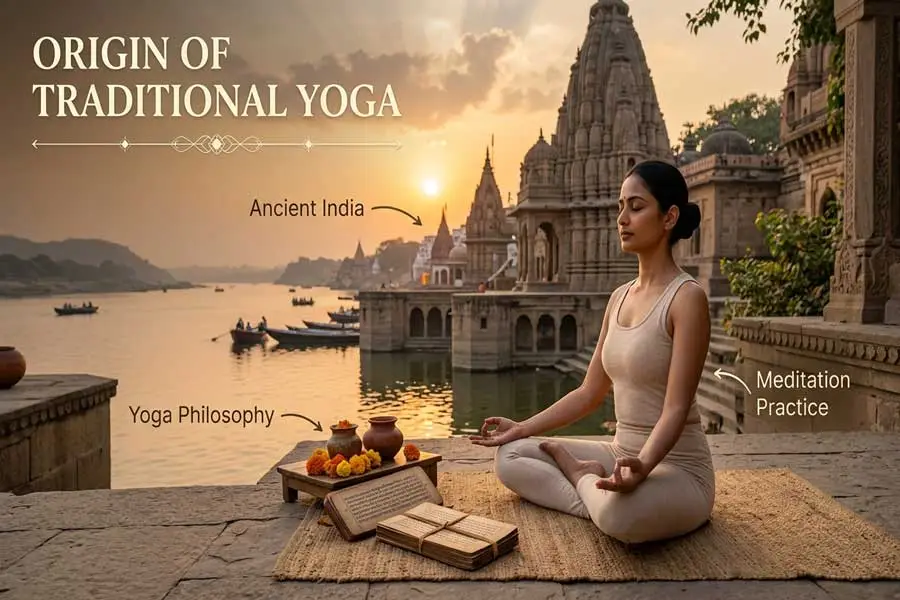
The roots of ancient yoga can be traced back to ancient Indian scriptures such as the Vedas and the Upanishads. Later, the sage Patanjali organized the philosophy of yoga in a classical text called the Yoga Sutras.
In this text, Patanjali described the famous Eight Limbs of Yoga (Ashtanga Yoga), which form the foundation of classical yoga practice.
These eight limbs are:
Yama – Ethical principles
Niyama – Personal discipline
Asana – Physical postures
Pranayama – Breath control
Pratyahara – Withdrawal of senses
Dharana – Concentration
Dhyana – Meditation
Samadhi – Spiritual enlightenment
These steps show that yoga is not just about exercise; it is a holistic path toward self-realization and overall well-being.
Key Practices in Traditional Yoga
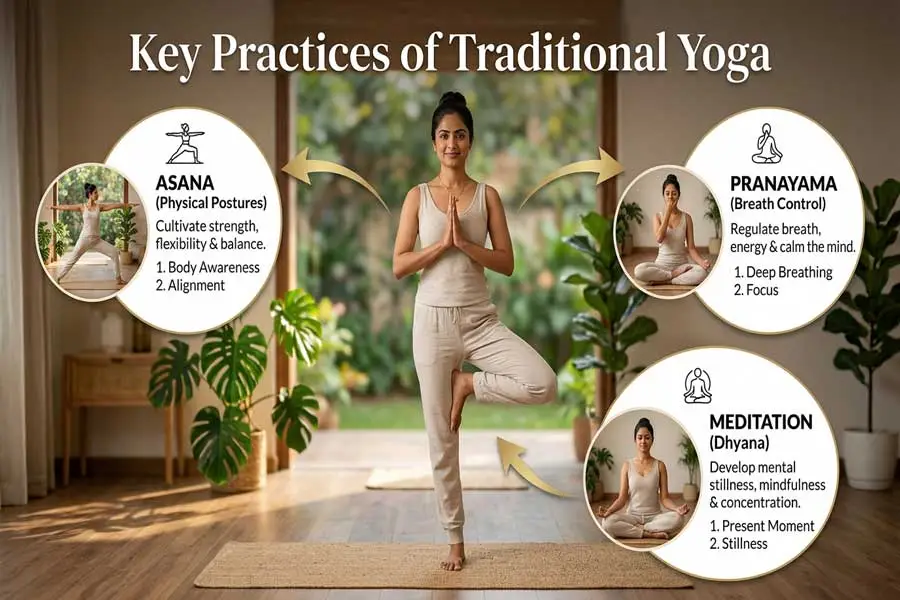
Traditional yoga includes several practices that work together to improve overall health and awareness.
1. Asanas (Yoga Postures)
Asanas are the physical postures used in yoga practice. These poses help improve:
Flexibility
Strength
Balance
Body posture
Some common classical yoga poses include Tadasana (Mountain Pose), Bhujangasana (Cobra Pose), and Padmasana (Lotus Pose).
Unlike fast-paced modern workouts, these yoga asanas are performed slowly and mindfully, allowing the practitioner to focus on breath and body awareness.
2. Pranayama (Breathing Techniques)
Pranayama is the practice of controlling and regulating the breath. Breath is considered a powerful source of life energy, known as prana.
Popular pranayama techniques include:
Anulom Vilom
Kapalbhati
Bhramari Pranayama
Regular breathing practice helps improve lung capacity, mental focus, and emotional balance.
3. Meditation (Dhyana)
Meditation is one of the most important aspects of yoga practice. It helps calm the mind and develop inner awareness.
Practicing meditation daily can help:
Reduce stress and anxiety
Improve concentration
Increase emotional stability
Promote inner peace
Even 10–15 minutes of meditation every day can make a significant difference in mental health.
Benefits of Traditional Yoga
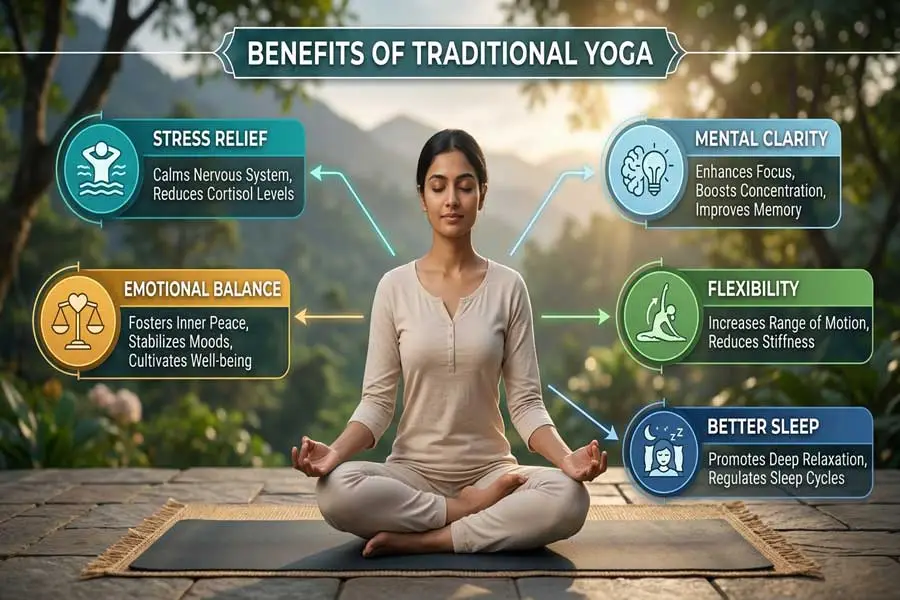
This ancient yoga practice offers many benefits for both physical and mental health. Because it focuses on the whole person, the benefits go beyond simple fitness.
1. Improves Physical Health
Regular yoga practice helps strengthen muscles, improve flexibility, and enhance posture. It can also help reduce common issues like back pain, joint stiffness, and fatigue.
2. Reduces Stress and Anxiety
Through breathing exercises and meditation, this yoga practice activates the body’s relaxation response, helping to reduce stress hormones and promote calmness.
3. Enhances Mental Clarity
Yoga encourages mindfulness and concentration. This helps improve focus, memory, and decision-making abilities.
4. Improves Sleep Quality
People who practice yoga regularly often experience better and deeper sleep, which is essential for overall health.
5. Supports Emotional Balance
Regular yoga and meditation practice help create emotional stability by calming the nervous system and promoting positive thinking.
Traditional Yoga vs Modern Yoga
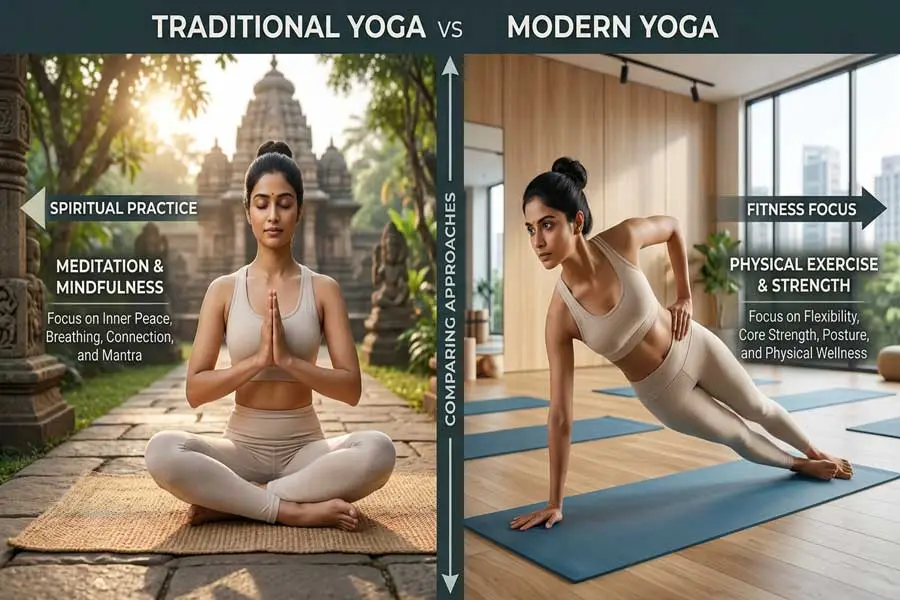
Many people wonder what the difference is between traditional yoga and modern yoga.
Traditional yoga focuses on:
- Spiritual growth
- Meditation and breath control
- Mind-body balance
- Inner awareness
Modern yoga, on the other hand, often focuses more on:
- Physical fitness
- Weight loss
- Flexibility training
Both styles can be beneficial, but traditional yoga offers a deeper and more holistic approach to health and wellness.
How Beginners Can Start Traditional Yoga
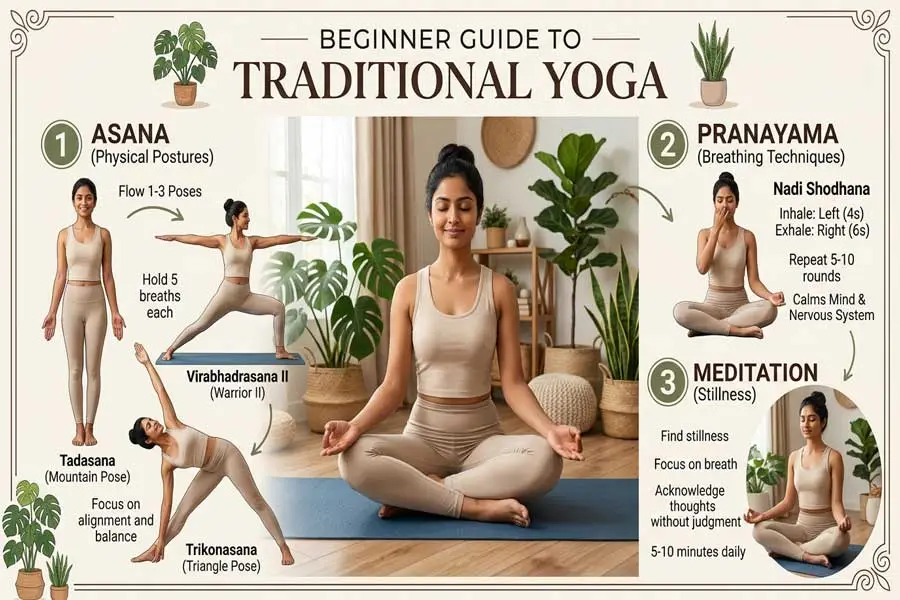
If you are new to yoga, starting a traditional yoga practice is simple. Here are a few steps:
Begin with basic yoga asanas for flexibility and strength.
Practice pranayama breathing exercises for 5–10 minutes daily.
Add meditation to calm the mind.
Stay consistent with practice, even if it’s only 15–20 minutes a day.
Consistency is more important than intensity. Over time, regular yoga practice will help create a balanced and healthy lifestyle.
Final Thoughts
Yoga is much more than a workout routine. It is an ancient system designed to bring harmony to the body, mind, and spirit. By combining physical movement, breathing techniques, and meditation, yoga offers a powerful path toward overall well-being.
In today’s fast-paced world, returning to the roots of ancient yoga practices can help people reconnect with themselves, reduce stress, and live a more mindful life.
Whether you are a beginner or someone looking to deepen your practice, this timeless yoga tradition continues to benefit millions of people around the world.
If practiced regularly, it can become not just an exercise, but a way of life that supports long-term health, balance, and inner peace.